
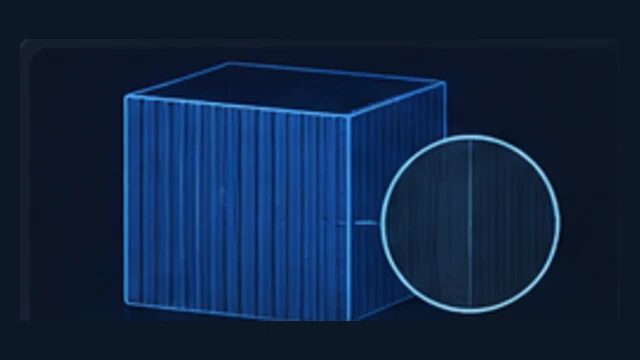
What are VFA?
Vertical Fine Artifacts (VFA) are fine, repeating stripes or shadows on mostly smooth vertical walls. They can be subtle and often become obvious only under angled light. A key clue is that spacing or intensity may change when print speed changes.
VFA vs. ringing and Z-banding
Ringing/Ghosting appears as a decaying wave after a corner or sudden direction change. Z-banding forms horizontal bands that repeat along the Z axis. VFA are primarily fine vertical or motion-related patterns.
What causes VFA?
There is rarely one slicer switch responsible. Stepper motors, belts, pulleys, bearings, motor current, microstepping and the dynamics of the XY system can create periodic excitation. The speed range is often critical: one printer may show strong VFA at 60 mm/s and much cleaner walls at 100 or 140 mm/s, while another behaves differently.
How to diagnose VFA
- Print a speed test with long smooth outer walls.
- Change speed in clear steps without simultaneously changing flow, temperature and acceleration.
- Check belts, pulleys and mounts for play, alignment issues or damaged teeth.
- Use slicer preview to verify the wall was actually printed at the assumed speed.
Simply printing slower is therefore not a reliable fix. The goal is to identify speed ranges that excite the motion system less.
What can help?
Depending on the cause, a different wall speed, correct belt tension, clean pulleys or a mechanical correction may help. Input shaping is mainly designed to reduce resonance and ringing; it does not automatically remove VFA. Flow and Pressure Advance should not be changed randomly unless the pattern indicates an extrusion problem.
Practical rule
If a fine vertical pattern on long smooth walls changes systematically with speed, a dedicated VFA speed test is far more useful than random extrusion or cooling adjustments.